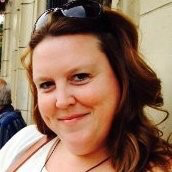
The Journey
The red thread
My experience as a chef in local food systems exposed the limitations and fallacies of neoliberal economics, leading me to explore more inherent social and informal economies — uncovering that humans are members of complex social systems, whose choices are deeply embedded in social relationships and the ecological context versus self-interested, profit-seeking, utility-maximizing rational actors. This philosophy has driven my work to date.
Oregon's farm-to-table movement
It was a choice that was not difficult to make at the time — continue on in law school, or pursue the opportunity my casual job was affording me. At work I was intuitively working my way up in the restaurant business. Within two years I went from cashier to dishwasher to line cook to sous chef. I was working on the farms during the day and taking freshly harvested produce back to the restaurant to cook in open kitchens, on wood-fired grills or ovens, for a willing and hungry clientele. Nothing felt more real, more tangible, more heart-wrenching than pouring yourself open on a line out of respect and care for the farmers and producers of our state. I went on to have multiple Executive Chef stints at some of Oregon's most renowned farm-to-table restaurants over a decade and a half, providing me with some of the most relevant transferable skills I have today (hello, multi-tasking in dynamic environments), while also laying the foundation for what was to evolve as my purpose and life's work.
Food systems
I was deeply rooted in a system without knowing it. I watched farmers toil over their crops and figure out how to scale their chicken operations. I partnered with restaurant operators as they tried to make sense of how to bring farm-fresh food to the table, creatively and innovatively showcased while not breaking the bank. And I was part of an entire generation of chefs who were no longer scullery staff but the purveyors of the ancient art of hospitality, where cooking became storytelling and every plate carried the imprint of the people who made it possible. To stand out in the field, I needed to hone a skill other chefs did not have. I became good at running the business while also creating stunning food. I needed to understand the system better. This simple act changed the trajectory of my career and put me squarely and more deeply into learning about infrastructure — supply chains, sourcing, inventory management, labor and operations, and ultimately how to get very creative with limited resources. I had good success in this work and eventually branched out to support other small businesses in building operational efficiencies while becoming financially creative. Little did I know this skill would prepare me well for nonprofit work.
Scaling deeper: global informal economies
When it was time to leave the restaurant business, I quickly turned to deepening the work I was doing in Oregon, but on the global stage. Food insecurity and economic development theory called to me, so I packed up and moved to Brussels with the dogged determination to work for the United Nations. I successfully defended a Master's with Distinction focused on informal economies — how they function and contribute to livelihoods even in the most constrained environments, like refugee camps. I turned an internship at the World Food Programme's Brussels donor office into an Officer role supporting field offices with their EU development projects. As external relations liaison for the EU office I also hosted and briefed all visiting diplomats, the Executive Director, and a range of EU politicians, as well as carrying out stakeholder consultations. The work was instrumental to my development as a strategist. Learning how the UN strategizes programs, gains consensus, builds and funds them through government actors — and then how field offices must implement — was foundational to the success of my career change. I traveled the world seeing EU development projects to fruition; it was very rewarding.
Nonprofit executive
Years later I returned to the US to see how these skills translated to my home environment, if at all. Naturally, cause-based work is found in the nonprofit sector here, and I made an easy transition into entrepreneur ecosystems work — first with the State of Oregon, analyzing their small business contracting program and learning how government procurement worked, then translating that work to women entrepreneurs specifically. I became deeply engaged in mapping women's role in informal economies through a series of small nonprofits whose mission was to advance women via business ownership and financial independence. My role in scaling these nonprofits and their programs — advocating for more resources for women including more financial frameworks, building their informal economic muscle via increased social capital and relationships while shifting consumer behavior — was a full-circle moment. I traveled far but had not drifted from the origin thesis I was wholly invested in understanding all those years later. I also leveraged my skills from earlier in my career and practiced nonprofit leadership from a more efficient, innovative lens — getting crafty with little, building social enterprises for earned income revenues, and developing experiential learning opportunities for beneficiaries over hand-outs.
Honing in
Today I have come to appreciate and value my work in terms of a 'practice.' I am able to cultivate approaches not based on international directives or status quo but in the moment — given the context and the interstitial nature of a problem — while uniquely applying all the various tools and techniques from decades of experience. This is not different from a chef quietly contemplating how to piece together a story on a plate with the history and social structure of the food system at her back. I weave together parts of the rigorous logical frameworks of the UN but with the softness and grace of a diplomat. I may apply the brigade-like theory of change system, but in community workshops that allow the grassroots thinking and innovation from folks most affected to rise like cream, distilling those into powerful recommendations for what's next. Or I may find the best applicable approach to an organization deep in the throes of internal chaos is similar to the circular ecology of a farm — pulling up and composting what is rich and good to make it something else that functions within a system of other rich and good organizations. I may lean away from theory and more into practice these days, and I advocate with even more fervor against using the old outdated processes of a structure that does not serve the collective 'us' — but now, having been there, I know how to carve pathways out. One thing is sure: the loop continues on in the circle, and the arc of FLEX Collective is here. Excited to cross your path and co-create what's next.